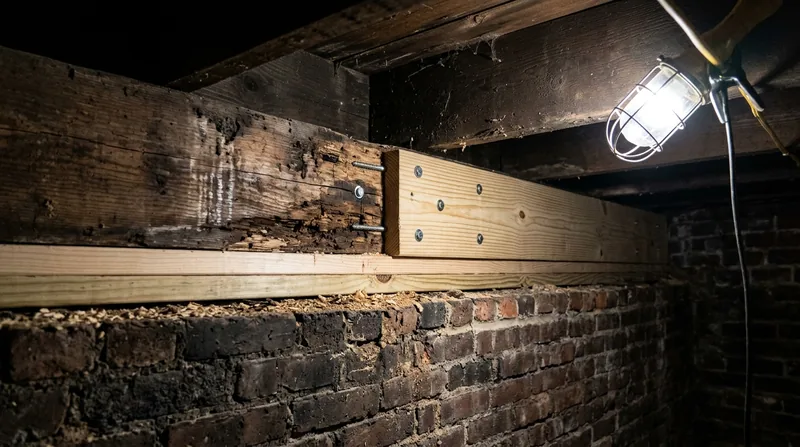




Floor Joist & Subfloor Repair in Paterson addresses the structural decay that settles into the wood-frame houses built across Dublin, Riverside, Sandy Hill, and the Eastside Park neighborhoods. Paterson's 1890s-1930s two- and three-family wood-frame homes, colonial revivals, and post-war stock all rest on fieldstone and brick basements where sill plates sit close to grade, exposed to the city's humid continental climate, freeze-thaw cycles, and the seasonal flooding that the Passaic River brings. Sagging or bouncy floors, soft spots under foot, or visible rot at joist bearing ends are signs that water has compromised the structural wood. We sister or replace joists, rebuild subfloor sections, and level floors before finishes go back down, restoring the solid feel underfoot and the structural integrity your home needs. Call us at (862) 282-1733 for a free estimate, or read on to understand what causes these failures and how we repair them.
Why Floor Joists Fail in Paterson Homes: The Local Picture
Paterson's combination of old wood-frame construction, high water table, and climate makes joist failure predictable. Basements with sill plates near grade absorb moisture from the ground, from ice dams backed up on rooflines, and from nor'easters that soak fascia and soffits. The freeze-thaw cycle opens joints and drives water into end grain. Plumbing notched into joists decades ago weakens them. And the Passaic River flooding during storms like Irene in 2011 and Ida in 2021 soaked first-floor framing in Riverside and People's Park neighborhoods, rotting sills and bearing ends from the inside out.
- Moisture at the basement sill plate rots the joist bearing ends where wood meets concrete or fieldstone, a failure pattern we see in nearly every old Paterson basement.
- Plumbing runs notched into joists long ago reduce the wood's load-carrying section, forcing the floor to sag or bounce under normal weight.
- Termite damage at the bearing ends, documented by a pest inspection, weakens the joist's ability to carry load and must be repaired or replaced.
- Flood water from Passaic River events or heavy basement seepage saturates subfloor and rim joist framing, leading to wood rot and soft spots that spread if not addressed.
- Settling of old foundations and basement walls can tilt joists out of plumb or crack their bearing points, allowing deflection and flex in the floor above.
Left unrepaired, soft or sagging floors grow worse over time, and the wood continues to rot, making the eventual repair more expensive and invasive.
Key info: A floor that bounces or feels soft when you walk on it, or shows visible rot or dark staining at basement sill plates, needs inspection and repair before the damage spreads into the rim joist and subfloor. In Paterson's Hillcrest and Eastside Park neighborhoods, where homes sit on older fieldstone foundations, moisture wicking into the sill plate is the leading cause of joist failure. See our page on wood rot and dry rot repair for more detail on identifying and addressing rot in structural wood.
For guidance on permits and inspections, check with the City of Paterson Building Department, which can advise on whether your repair requires a permit based on the scope and structural classification of the work.
How We Repair Sagging Floors and Rotted Joists in Paterson
Our process begins with a walk-through and basement inspection to identify the cause of the sag or bounce. We probe suspect wood with a sharp tool to gauge the depth of rot, document what we find, and propose repair or replacement. We then sister sound joists alongside compromised ones, or replace sections of rim joist and subfloor where rot has penetrated too deeply. We use sistering (fastening a new joist alongside the old, full-length or partial) to restore load capacity without the cost and mess of complete replacement when the existing wood is sound at its core. We level the floor as we work, using temporary supports and hydraulic jacks where needed, then fasten new subfloor and prepare the surface for finish flooring.
- We inspect the basement, sill plate, and joist bearing ends to identify rot, termite damage, or notching that caused the failure.
- We probe suspect wood with a moisture meter and sharp tool to determine how deep the decay goes and whether repair or replacement is the right call.
- We install temporary supports (posts and beams) to carry the load of the floor above, freeing us to work safely on the compromised joists below.
- We sister a new joist alongside the old one, bolting them together and running the new joist the full span or the compromised section, depending on the damage.
- We replace subfloor sections that are soft, rotted, or too far gone to repair, using new lumber and fastening it to the repaired joists with construction adhesive and screws.
- We level the floor using hydraulic jacks and shims, then remove the temporary supports once the new framing is fastened in place and carries full load.
- We leave the basement clean and the subfloor ready for your flooring contractor or for us to install finish flooring if that's part of the plan.
The entire job is staged so that the floor remains stable and safe throughout the repair, and we restore the structural integrity that your home needs.
Example: A three-family house on Madison Avenue in Paterson had a soft spot in the second-floor living room, a sign of rot at the joist bearing ends where the sill plate met a damp basement wall. We installed temporary supports, removed the rotted bearing ends, installed a new rim joist and sistered the compromised joists, then leveled the floor and installed new subfloor. The repair took four days and cost less than half what a full joist replacement would have. The floor is now solid and level, and the homeowner has no further settling or bounce. This same repair pattern appears in Fair Lawn, Clifton, and Hawthorne, wherever old wood-frame homes sit on wet or damp basements.
Floor Joist Repair Methods: Sistering, Replacement, and Subfloor Restoration
We choose the repair method based on the extent of decay, the load the joist carries, and whether the wood's core is sound enough to sister. A partially rotted joist with sound wood at mid-span is a candidate for sistering. A joist that is rotted through its bearing ends or notched for plumbing may need partial or full replacement. A subfloor that is soft, cupped, or water-damaged gets replaced.
| Approach | Description | Best for |
|---|---|---|
| Sistering | A new joist is bolted alongside the compromised one, running the full span or the damaged section, restoring load capacity without removing the old wood. | Joists with localized rot or notching, where the core wood is sound and the joist can carry partial load during repair. |
| Partial Joist Replacement | We remove the rotted section (usually the bearing end) and splice in new wood, fastening it with bolts, blocking, and new bearing support. | Joists where rot is confined to the bearing end or a short mid-span section, and the rest of the joist is sound. |
| Full Joist Replacement | We remove the entire compromised joist and install a new one, re-establishing bearing at the rim joist and sill plate and fastening it to the header. | Joists that are rotted along their length, severely notched, or damaged by termites or flood, where repair would be unreliable. |
| Subfloor Replacement | We remove soft, cupped, or water-damaged subfloor and install new plywood or boards, fastening it to the repaired joists with adhesive and screws. | Subfloor that is too far gone to sand or finish, or that has absorbed water and lost its structural integrity. |
| Rim Joist Repair | We replace rotted rim joist sections or install a new rim joist, re-establishing the bearing surface for floor joists and the seal at the sill plate. | Rim joists that are rotted from water exposure, termite damage, or age, where the rot affects the bearing surface or the sill connection. |
Each method is chosen based on what the wood tells us and what will give you the most reliable, cost-effective repair. We explain the choice and the trade-offs before we begin work.
Floor Joist & Subfloor Repair Cost in Paterson: What to Expect
Floor joist and subfloor repair in Paterson typically starts at $1,800 for a small, localized repair such as sistering one or two joists or replacing a short section of subfloor in a confined area. Larger jobs, such as repairing multiple joists across a room or replacing a significant section of rim joist and subfloor, run $3,500 to $6,000 or more, depending on the extent of decay, the accessibility of the work, and whether the joists are easy to reach or buried under finished flooring. A full floor replacement or a repair that requires structural engineering and permitting can exceed $8,000.
The main factors that move cost up or down are the extent of decay (localized rot versus widespread), the accessibility of the joists (easy basement access versus crawlspace or finished rooms above), the number of joists involved, whether temporary supports are needed, and whether the repair is sistering or replacement. A floor that is bouncy but has only one or two soft spots may need only partial repair; a floor that sags across the entire room likely needs work on multiple joists and the rim. Getting 2 or 3 estimates from local carpenters will give you a realistic picture of what your specific job will cost.
See our full pricing page for more detail on how we break down costs, and call us at (862) 282-1733 for a free estimate with no obligation.
Floor Joist & Subfloor Repair Near Me: What Paterson Homeowners Should Know When Hiring a Carpenter
When you're looking for a carpenter to repair joists and subfloor in Paterson or nearby towns like Clifton, Passaic, or Fair Lawn, the quality of the work depends on the skill and honesty of the person doing it. A good carpenter will inspect the damage, explain what caused it, and propose repair or replacement based on what the wood justifies, not on what generates the biggest bill. He or she will be fully insured, carry liability and workers compensation, and be willing to show proof of coverage. He or she will get a permit if the scope of work requires one (check with your local building department to confirm), and will work within the codes and standards that apply to structural carpentry in your town.
- Get 2 or 3 written estimates before you commit, and compare not just the price but what each estimate includes and what methods are proposed.
- Ask for references from recent jobs in Paterson or your town, and call them to ask whether the work was solid, the crew was professional, and the job was finished on time.
- Confirm that your carpenter carries liability insurance and workers compensation insurance, and ask to see a certificate of insurance before work begins.
- Understand whether your job requires a permit by contacting your local building department, and hire a carpenter who knows the permit requirements and will pull one if needed.
- Ask your carpenter to explain the repair method and why it's the right choice for your floor, rather than accepting vague language like "we'll fix it."
- If you're filing an insurance claim for water damage or flood, ask your carpenter to help document the damage with photos and notes that will support your claim.
A carpenter who takes time to understand your floor, explain the repair, and answer your questions is worth the call. Contact us at our contact page to request a free estimate, or call (862) 282-1733 to discuss your floor repair.
Floor Joist & Subfloor Repair in Paterson: Pricing Guide
| Service | Price | Details |
|---|---|---|
| Localized joist repair or subfloor section | Starting at $1,800 | Sistering one or two joists or replacing subfloor in a confined area with good basement access |
| Multi-joist repair or rim joist replacement | Starting at $3,500 | Repairing three or more joists, replacing rim joist sections, or subfloor across a room or larger area |
| Full floor restoration or complex structural repair | On estimate | Extensive decay, multiple joists, poor access, or repairs requiring temporary support and permitting need site inspection |
| Travel and site visit | Included | No separate charge for travel within Paterson and surrounding service areas, estimate included |
| Free estimate | No charge | Response within 24 hours at (862) 282-1733, no obligation to book or commitment required |
Indicative pricing, the exact cost depends on square footage, finish, and site access. Free personalized estimate within 24h at (862) 282-1733.


