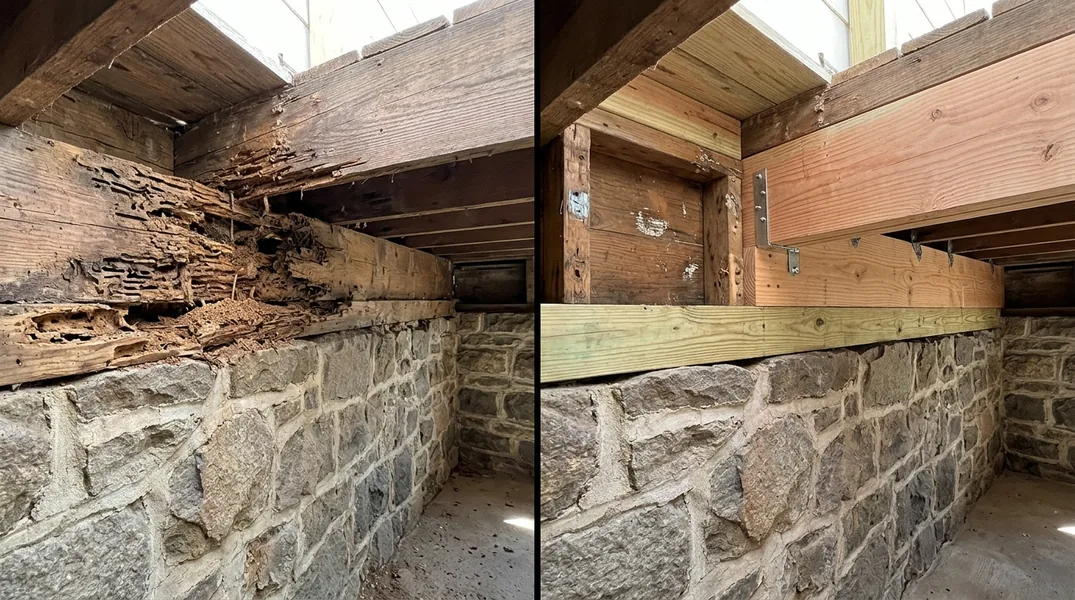
Dry Rot, Carpenter Ants, and Termites: Why the Confusion?
If you own a home in Paterson, you've probably worried about wood-destroying pests and fungi at some point. The problem is that dry rot, carpenter ants, and termites can all cause similar-looking damage to your home's structure, making it difficult for homeowners to know exactly what they're dealing with. Yet the differences matter enormously. Each pest or condition requires a completely different treatment approach, and misidentifying the problem could mean wasting time and money on the wrong solution.
The good news is that with a little knowledge, you can learn to spot the telltale signs of each culprit. Understanding Wood Rot & Dry Rot Repair needs versus pest infestations will help you take the right action quickly. In this guide, we'll walk you through the key differences so you can identify what's happening in your walls, attic, or basement before it becomes a major structural problem.
What Is Dry Rot and How Does It Damage Wood?
Dry rot is a fungal disease that destroys the structural integrity of wood, despite its misleading name. The term 'dry' is actually a misnomer because dry rot requires moisture to develop and spread. When wood is exposed to high humidity or water infiltration and lacks proper ventilation, fungal spores germinate and begin consuming the cellulose in the wood fibers. This process weakens the wood until it becomes brittle and crumbles easily under pressure.
One of the most distinctive features of dry rot is its appearance. Infected wood often develops deep cracks that run both along and across the grain, creating a distinctive cubical pattern. The wood may also turn a dark brown or gray color, and you might notice a musty, earthy smell in affected areas. Unlike termite or carpenter ant damage, dry rot doesn't leave sawdust piles or tunnels. Instead, it leaves the wood feeling spongy or hollow when you press on it. If you suspect dry rot in your Paterson home, don't delay in getting it inspected, because the fungus spreads through the wood and can eventually compromise your home's foundation and load-bearing walls.
Carpenter Ant Damage vs. Termite Damage: Key Differences
Carpenter ants and termites are often confused because both can cause extensive damage to wooden structures. However, they operate very differently. Carpenter ants do not eat wood for nutrition. Instead, they tunnel through wood to create galleries where they nest and live. This means the wood they remove is discarded as sawdust, which accumulates near their entry and exit points. When you find piles of fine, powdery sawdust around baseboards, window frames, or attic spaces, carpenter ants are likely the culprit.
Termites, on the other hand, actually consume wood as their primary food source. They work from the inside out, often leaving a thin outer shell of wood intact while hollowing out the interior. This is why Termite Damage Repair can be so tricky to spot early on. You might not notice severe damage until the wood collapses or caves in under pressure. Termites also leave behind mud tubes on foundation walls and wooden beams, which they use as protected highways to travel between their colony and food sources. If you see these distinctive brown tubes, termite infestation is almost certain.
Signs of Termite Damage in Wood: What to Look For
Knowing the signs of termite damage in wood is crucial for Paterson homeowners, since termites in New Jersey are an active threat during warm months and can cause significant structural damage if left unchecked. One of the most obvious indicators is the presence of mud tubes. These pencil-thin or thicker tunnels run along foundation walls, basement beams, and crawl space supports. Termites build these tubes to maintain moisture and protection while traveling to and from food sources. If you see them, act immediately.
Another red flag is wood that sounds hollow when you tap on it, or wood that feels soft or spongy when pressed with a screwdriver or awl. Unlike the cubical cracking pattern of dry rot, termite damage often leaves galleries (hollow tunnels) that follow the wood grain. You might also notice buckling or warping of floors and walls, especially near ground level or in basements. Swarmers, which are winged termites that emerge in spring to start new colonies, are another sign. If you see flying insects near windows or light sources in your home, have a professional inspect immediately. The presence of discarded wings on windowsills is a telltale sign of termite activity.
How to Tell if You Have Carpenter Ants
Carpenter ants are large, visible insects, which actually makes them easier to spot than some other wood-destroying pests. Adult carpenter ants are typically black, red, or a combination of both, and they range from 0.5 to 1 inch in length. If you see these ants crawling around your home, especially in kitchens, bathrooms, or near water sources, there's a good chance you have a carpenter ant colony somewhere in your structure.
The most reliable indicator of carpenter ant activity is the presence of sawdust piles. Look around baseboards, under windowsills, in attics, and along the edges of walls for fine, granular sawdust that resembles coarse powder. Carpenter ants also create a rustling sound inside walls at night, which some homeowners report hearing if the infestation is large enough. Unlike termites, carpenter ants don't build mud tubes, but they do prefer areas with moisture problems. If you've had water damage, roof leaks, or plumbing issues, carpenter ants are more likely to move in. Addressing moisture problems and sealing entry points can help prevent infestations, but if you already have them, professional treatment is necessary to eliminate the colony.
When to Call a Professional for Wood Damage Repair Near Me
Once you've identified the problem, it's time to bring in the experts. Whether you're dealing with dry rot, termites, or carpenter ants, attempting a DIY fix is rarely effective and often makes the problem worse. Dry rot requires not only removal of infected wood but also identification and correction of the underlying moisture source. Termite infestations need professional pest control treatment followed by structural repairs. Carpenter ant colonies must be located and eliminated before any wood repairs can be truly effective.
At Paterson Carpentry, we specialize in identifying and repairing all three types of wood damage. Our team can assess the extent of the damage, recommend the best course of action, and handle repairs ranging from simple patching to major structural work like Floor Joist & Subfloor Repair or Beam Replacement & Load-Bearing Wall Removal. If you suspect any type of wood damage in your home, don't wait. Call us at (862) 282-1733 or visit our website to request a free estimate. Early detection and professional intervention can save you thousands of dollars in the long run.
Looking for a professional carpentry contractor in Paterson? Paterson Carpentry responds fast for all your carpentry needs.
Get a Free QuoteOur services: Wood Rot & Dry Rot Repair · Termite Damage Repair · Floor Joist & Subfloor Repair