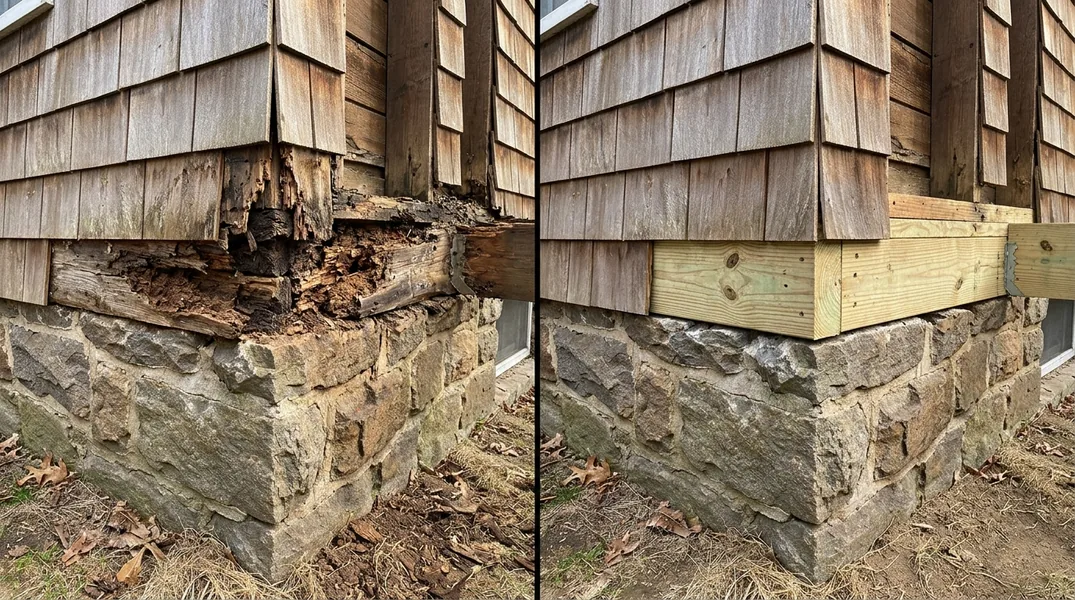
When Can You Repair Rotted Wood Without Replacing It?
One of the most common questions homeowners ask is whether their damaged wood can be saved or if a full replacement is necessary. The answer depends on several factors: the extent of the rot, the location of the damage, the wood species, and the structural role that wood plays in your home.
Wood Rot & Dry Rot Repair is often possible when the damage is surface-level or affects only a small percentage of the wood's depth. If the rot has penetrated less than one-third of the way through a beam, joist, or wall stud, repair techniques like epoxy injection, wood consolidation, and localized replacement of the damaged section may be viable. However, if the rot has compromised more than half the wood's structural integrity, replacement becomes the safer and more cost-effective option.
The type of rot also matters. Dry rot, which is caused by specific fungal species, tends to spread more aggressively than wet rot, which is typically arrested once the moisture source is removed. In Paterson, where humidity and water intrusion are common concerns, understanding the difference between these two types helps determine your best repair strategy.
Flood Damaged Subfloor Repair: Can It Be Salvaged?
Flooding poses a unique challenge for homeowners because water damage doesn't just affect the visible surface of your floors. When water saturates a subfloor, it creates an ideal environment for rot, mold, and structural failure. The question of whether your subfloor can be repaired depends on how quickly the water was removed, how long the wood remained wet, and whether the moisture has already triggered decay.
In the immediate aftermath of a flood, quick action is critical. If the subfloor dries within 24 to 48 hours, and no mold or rot has begun to develop, the wood may survive without replacement. However, most homeowners don't discover water damage until days or weeks later, by which time microbial growth has already begun. Floor Joist & Subfloor Repair becomes necessary when the wood has started to soften, discolor, or develop a musty odor.
If only a small section of the subfloor is affected, targeted repair or sistering (reinforcing with new wood) may be possible. However, if the damage is widespread across multiple joists or if the structural integrity is compromised, full replacement of the affected area is the only safe option. A professional assessment is essential before making this decision, as hidden damage beneath flooring can be more extensive than what's visible from above.
Termite Damaged Wood Repair: Structural vs. Cosmetic Damage
Termite Damage Repair presents a different challenge than rot because termites create hollow galleries within the wood while leaving the outer shell relatively intact. This means a beam or joist may look sound on the surface but be significantly weakened from the inside. The decision to repair or replace depends on how extensively the termites have tunneled through the wood.
If termite damage is limited to non-structural trim, fascia, or siding, repair is often feasible. The damaged section can be cut out and replaced with new wood, or the area can be filled and reinforced. However, if termites have compromised load-bearing elements like main beams, floor joists, or wall studs, replacement is almost always necessary. These structural components carry the weight of your home, and even a 20 percent loss of wood integrity can create safety hazards and lead to sagging floors or wall failure.
Before any repair work begins, the termite infestation must be completely eliminated. Repairing termite damage without addressing the pest problem is like putting a band-aid on a broken bone. A professional pest control treatment, followed by structural inspection and repair, ensures that your home is both safe and termite-free moving forward.
Wood Rot & Dry Rot Repair Cost in Paterson: What to Budget
Understanding pricing for wood rot repair helps homeowners make informed decisions and avoid sticker shock. The cost varies dramatically depending on whether you're repairing or replacing, the location of the damage, and how extensive the problem is. Minor surface rot repair on trim or siding might cost $300 to $800, while more involved repairs to floor joists or structural beams can range from $1,500 to $5,000 or more.
Full replacement of structural elements is significantly more expensive. If an entire section of subfloor needs to be replaced, costs can easily exceed $3,000 to $8,000 depending on the square footage and accessibility. Beam Replacement & Load-Bearing Wall Removal projects are even more costly, often running $5,000 to $15,000 or beyond, particularly if temporary support structures are needed during the work.
The good news is that catching rot early almost always saves money. A small area of rot that's repaired promptly may cost a few hundred dollars, whereas the same rot left untreated for a year or two can spread to neighboring wood and require thousands in repairs. Moisture control, regular inspections, and prompt action are your best defenses against expensive damage. If you're concerned about wood damage in your home, reach out to Paterson Carpentry at (862) 282-1733 to schedule a free estimate and get a clear picture of your repair costs.
The Repair vs. Replace Decision: A Practical Framework
Making the final decision between repair and replacement requires weighing several practical factors. First, consider the structural importance of the damaged wood. Is it a load-bearing element or purely decorative? Load-bearing wood should be replaced if damage exceeds 25 to 30 percent of its cross-section. Non-structural wood can often be repaired even if damage is more extensive.
Second, evaluate the age and condition of the surrounding wood. If the damaged section is part of older framing that's otherwise sound, repair or reinforcement may preserve the character and integrity of your home. If the wood is already weakened by age or previous damage, replacement provides better long-term protection. Third, consider your budget and timeline. Repairs are faster and cheaper upfront, but if the damage is extensive, you may be paying for multiple repair attempts over several years. A single replacement, though more expensive initially, often provides better value over time.
Finally, factor in moisture control. No repair or replacement is permanent if the underlying cause of the damage, whether it's a roof leak, plumbing issue, or poor drainage, isn't addressed. Before any work begins, identify and fix the source of moisture. This is true whether you're dealing with rot in Paterson or any other location. Paterson Carpentry can help you assess both the damage and the moisture source, then recommend the most practical solution for your situation.
Getting a Professional Assessment Near You
The safest way to decide whether your wood can be repaired or must be replaced is to have a qualified carpenter inspect the damage in person. Visual inspection combined with hands-on testing using tools like moisture meters and wood hardness testers reveals the true extent of damage and structural impact. A professional can identify hidden rot, assess the spread of decay, and determine whether the wood is still sound enough to support loads.
Paterson Carpentry serves homeowners throughout the area with honest, experienced assessments and high-quality repair and replacement work. Whether you're dealing with water damage from a recent flood, termite galleries in your framing, or creeping dry rot in your basement, our team can evaluate your situation and recommend the most cost-effective solution. Contact us at (862) 282-1733 or visit our website to request a free estimate today. We'll inspect your damaged wood, explain your options clearly, and provide transparent pricing before any work begins.
Looking for a professional carpentry contractor in Paterson? Paterson Carpentry responds fast for all your carpentry needs.
Get a Free QuoteOur services: Wood Rot & Dry Rot Repair · Termite Damage Repair · Floor Joist & Subfloor Repair